Fun Math and Social Skills with Toy Cash Register
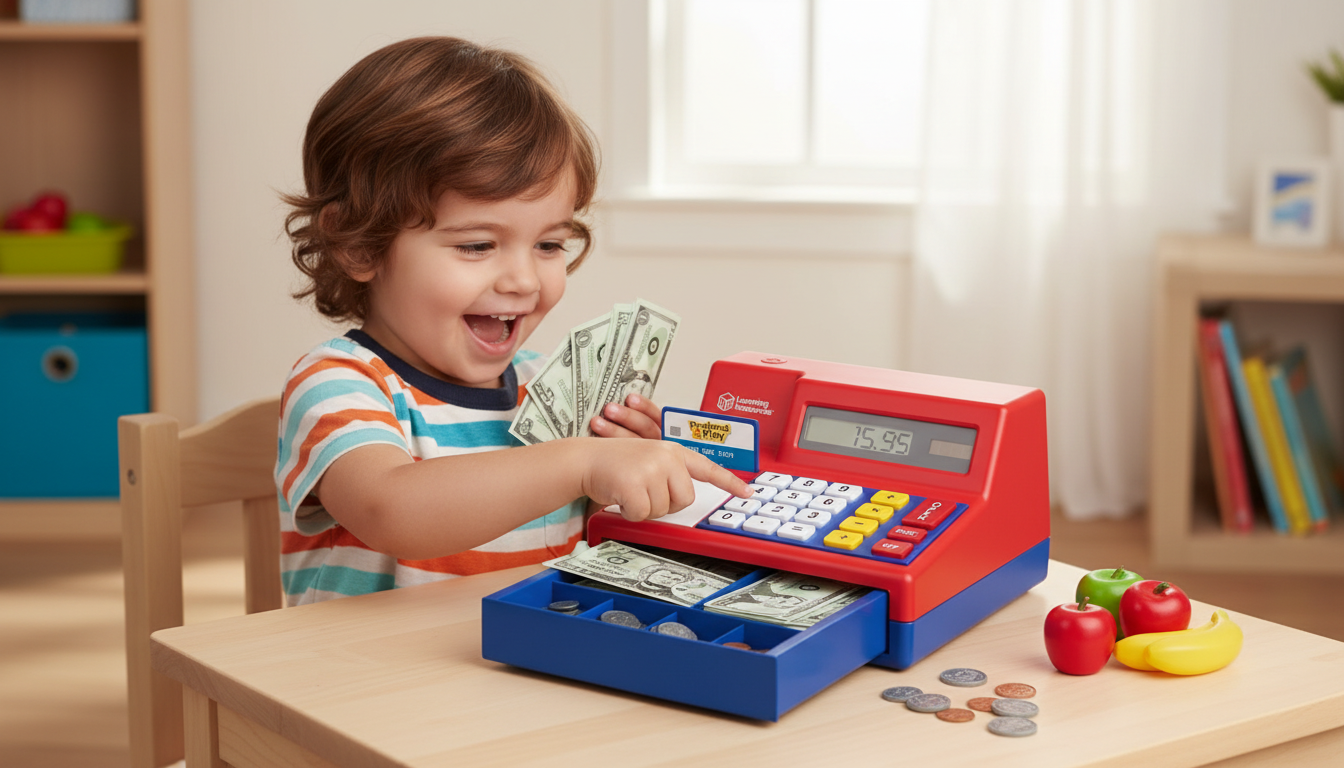
This interactive toy register encourages hands-on math learning through pretend grocery store play. It supports fine motor skills, counting, and social… — Amazon
Why Early Math Skills Matter

Math isn’t just about numbers on a page—it’s a foundational way children learn to think logically, solve problems, and understand the world around them. Early math skills like counting, addition, and subtraction form the basis for later success in math and other subjects. The American Academy of Pediatrics highlights that embedding math concepts in everyday play helps kids grasp these ideas more naturally and joyfully. Preschoolers who engage with early math in playful contexts show better numeracy skills and cognitive flexibility as they grow.
How Pretend Play Supports Math and Social Learning
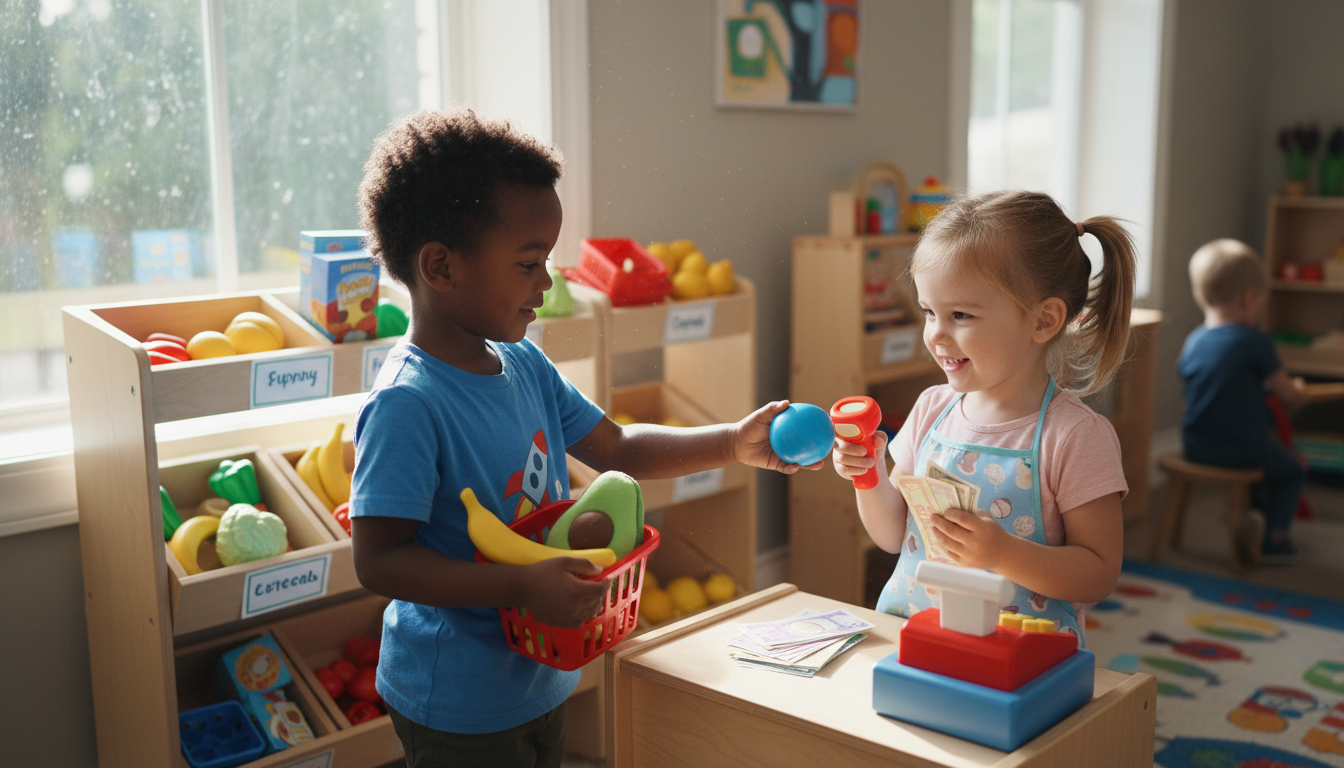
Pretend play is a natural context where math skills come alive. Playing store, for instance, gives children hands-on opportunities to count items, use money, and practice simple addition and subtraction as they “buy” and “sell” goods. This kind of role play also strengthens social skills—kids take turns, use socially appropriate phrases, and adopt imaginative roles like cashier and customer. Research shows that pretending with realistic props deepens understanding by linking abstract math to meaningful real-world contexts.
Moreover, managing “money,” pressing calculator buttons, and operating the cash drawer engage fine motor skills important for hand-eye coordination and finger dexterity—vital for writing readiness and everyday tasks.
Spotlight: Learning Resources Pretend & Play Calculator Register Toy
One toy that combines all these benefits is the Learning Resources Pretend & Play Calculator Register, a thoughtfully designed math learning playset for preschoolers aged 3 to 4. This interactive toy cash register goes beyond simple checkout role play:
- Solar-powered calculator with oversized buttons and display: Offers a real calculator kids can use to practice addition, subtraction, and number recognition through hands-on play.
- 73-piece pretend grocery store set: Includes play money, a kid-sized credit card, a card scanner, and a receipt pad, making the grocery store scenario feel complete and engaging.
- Lifelike cash drawer with ka-ching sound: Pressing the big open button triggers a satisfying cash drawer pop and sound, lending authenticity to pretend cashier roles.
- Durable design built for little fingers: Pieces promote fine motor skills as children manipulate coins, press buttons, scan cards, and write receipts.
Through imaginative play with this set, kids develop counting skills, practice simple math operations, and engage in social interactions—taking turns and negotiating roles—all within a rich pretend grocery store environment.
Extend the Learning at Home

Parents can enrich playtime with this set in many practical ways:
- Play customer and cashier together: Use the credit card and money to role-play shopping, encouraging your child to calculate costs or change aloud.
- Count and sort coins: Before or after checkout, help sort pretend coins by denomination to reinforce number recognition and categorization.
- Make simple shopping lists: Encourage your child to write or draw shopping lists for items to “purchase,” blending literacy development with math.
- Introduce basic addition and subtraction: Ask questions like “If you buy 3 apples and 2 bananas, how many fruits do you have?” to spark early arithmetic thinking.
- Take turns creating different store scenarios: One child can stock shelves while another checks out customers, promoting social cooperation.
- Talk about real money concepts: Label coins and bills and explain their use in everyday shopping to connect pretend play to real life.
These activities align with research that shows interactive and guided play deepens early math understanding and social communication skills.